Everything I want parents to know before choosing Math-U-See.
📖 IN THIS GUIDE
PART 1
A Little Honesty First
I’m Nicole, and we’ve partnered with Math-U-See to create video lessons and automatic online grading for their curriculum here at Nicole the Math Lady.
That means I’ve had the opportunity to get to know this curriculum inside and out. I’ve studied how it’s designed, taught thousands of its lessons, and watched countless homeschool families use it successfully. I’ve also seen where families struggle—not because the curriculum isn’t good, but because it wasn’t the right fit for their student or wasn’t used the way it was designed.
Over the years, parents have asked me one question more than any other:
“Is Math-U-See a good curriculum?”
My answer is always the same.
That’s the wrong question.
The better question is:
“Is Math-U-See the right curriculum for my child?”
I don’t believe there’s one math curriculum that’s best for every student.
Every curriculum makes different educational choices.
- Some students need more review.
- Some need more hands-on learning.
- Some enjoy discovering concepts on their own.
- Others appreciate direct instruction.
The best curriculum is the one that matches the way your child learns.
That’s exactly what I hope this guide will help you discover.
My goal isn’t to convince you to choose Math-U-See.
My goal is to help you make the best decision for your family.
My One-Sentence Review
If you asked me about Math-U-See over coffee, here’s what I’d probably say.
Math-U-See is one of my favorite curricula for students who need to see math, build math, and truly understand math before they’re ready to solve it on paper.
I also think it’s one of the most misunderstood homeschool math programs available today.
Most people describe Math-U-See as a mastery curriculum.
That’s true.
But it’s only part of the story.
What Is Math-U-See?
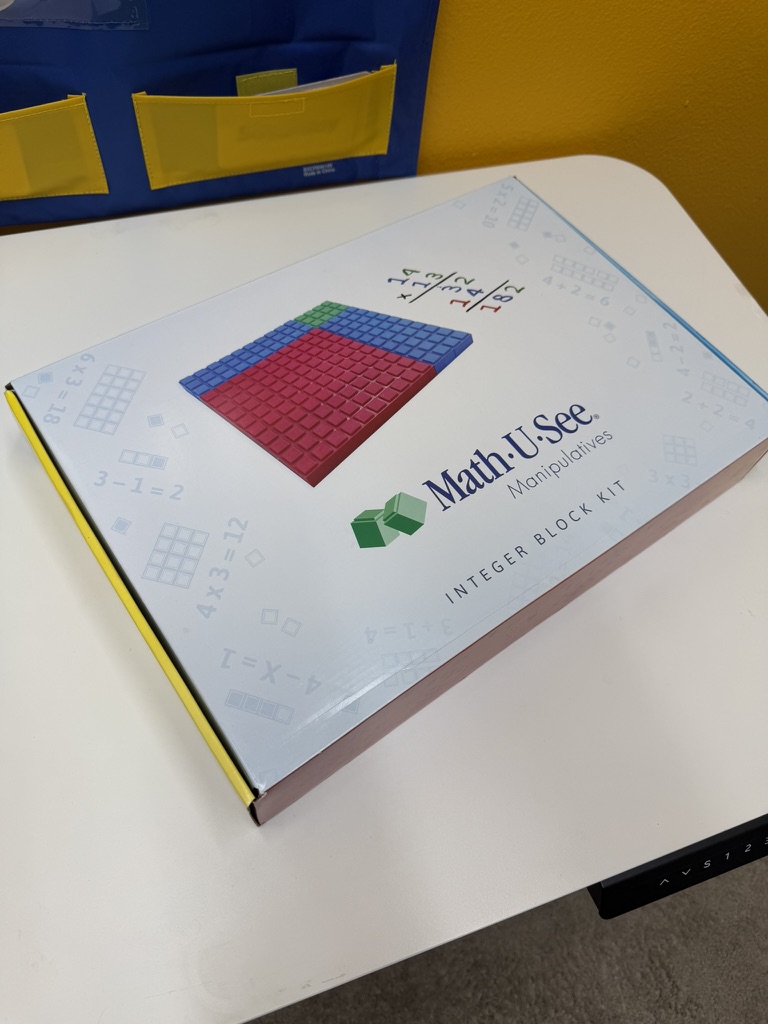
Before we dive deeper, let’s take a quick look at what Math-U-See actually is.
Math-U-See is a hands-on homeschool math curriculum published by Demme Learning. Rather than organizing instruction around traditional grade levels, the curriculum is organized around mathematical concepts. Students move from one level to the next after mastering the material, not simply because they’ve reached a particular age or grade.
What makes Math-U-See unique is its emphasis on helping students understand mathematics through manipulatives before asking them to solve problems abstractly. Throughout the curriculum, students Build It, Write It, and Say It, developing conceptual understanding before moving toward written procedures.
For families who appreciate hands-on learning and a strong conceptual foundation, that approach can be incredibly powerful.
What Makes Math-U-See Different?
Every math curriculum has its own philosophy.
- Some focus on repetition.
- Some focus on discovery.
- Some emphasize procedural fluency.
- Others spend more time building conceptual understanding.
Math-U-See is built around one simple idea.
Students understand mathematics better when they can see it before they’re expected to solve it.
Instead of introducing math as a collection of rules and procedures, students begin by building mathematical ideas with manipulatives.
They don’t just hear about place value.
They build it.
They don’t simply memorize multiplication facts.
They build arrays.
They don’t just calculate common denominators.
They build equivalent fractions.
Throughout the curriculum, students move from concrete experiences to written mathematics and eventually to abstract thinking.
Instead of asking students to memorize first and understand later, Math-U-See reverses the process.
Students build understanding first.
I have to give Steve Demme, the creator of Math-U-See, a lot of credit here. The system he created is remarkably simple, but there’s some real brilliance in that simplicity. Place value becomes the foundation, and then the manipulatives keep building on that same framework as the math gets more complicated. The more I’ve taught it, the more I’ve appreciated how thoughtfully the pieces fit together. You can tell there’s a real philosophy behind the program—not just a collection of math lessons.
💛 A Lesson That Changed the Way I Think About Math
There are very few moments in my teaching career where I’ve looked at a math concept and thought,
“I’ve been thinking about this differently all these years.”
Long division was one of those moments.
Like many of you, I learned long division as a sequence of steps.
Take 435 ÷ 3.
- Divide 4 by 3.
- Write a 1.
- Subtract and write 1.
- Bring down the 3.
- Repeat until you arrive at 145.
I could perform the algorithm perfectly.
But if you had asked me what was actually happening inside the problem…
I’m not sure I could have explained it.
Then I watched how Math-U-See teaches long division.
Instead of thinking about 435 as one number, imagine it as three different kinds of blocks:
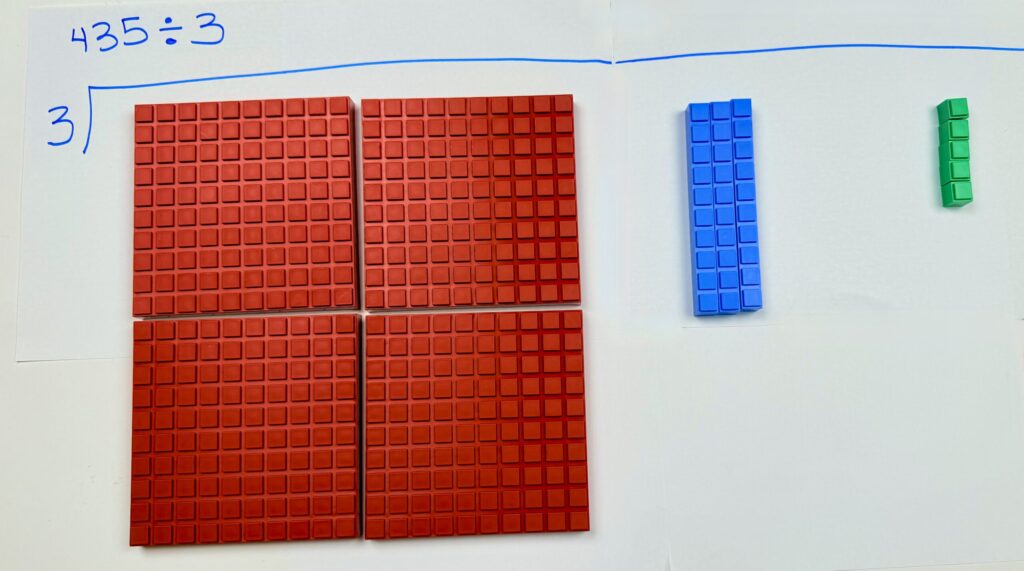
- 4 red blocks worth hundreds
- 3 blue blocks worth tens
- 5 green blocks worth ones
Now ask a completely different question.
How many groups of three can I make?
From the 4 red blocks, I can make one group of three, leaving one red block.
That one hundred isn’t just a leftover.
It becomes 10 tens.
Now I have 13 blue blocks.
How many groups of three can I make out of those?
Four groups.
One ten is left over.
That becomes 10 ones.
Add the original five ones and I now have 15 ones.
One last time…
How many groups of three?
Five.
The answer is still 145.
But now I understand why.
I’m not simply bringing down numbers because someone told me to.
I’m regrouping place value.
I’m exchanging hundreds for tens.
Tens for ones.
I’m actually seeing the mathematics happen.
That lesson completely changed the way I think about long division.
And that’s when I realized something important.
The manipulatives aren’t just helping students visualize math.
They’re revealing the mathematical structure underneath the procedures.
To me, that’s one of the greatest strengths of Math-U-See.
It doesn’t just teach students how to solve problems.
It helps them understand why those procedures work.
PART 2
What Does a Typical Math-U-See Lesson Look Like?
One of the things I appreciate most about Math-U-See is that every lesson follows a predictable rhythm.
Once your child understands the routine, they know exactly what to expect. Instead of wondering what’s coming next, they can focus on learning the mathematics.
The lesson actually has two different parts:
- Learning the new concept
- Practicing the new concept
Understanding that distinction helps explain why Math-U-See works the way it does.
Learning the New Concept
Every new lesson begins with what Math-U-See calls the Build It • Write It • Say It model.
🧱 Step 1: Build It
The lesson begins with the manipulatives.
Your child doesn’t start by looking at a worksheet.
They start by building the mathematics.
This is one of the biggest differences between Math-U-See and many other curricula.
The manipulatives aren’t an extra activity.
They’re not something you pull out when your child is struggling.
They are the primary teaching tool.
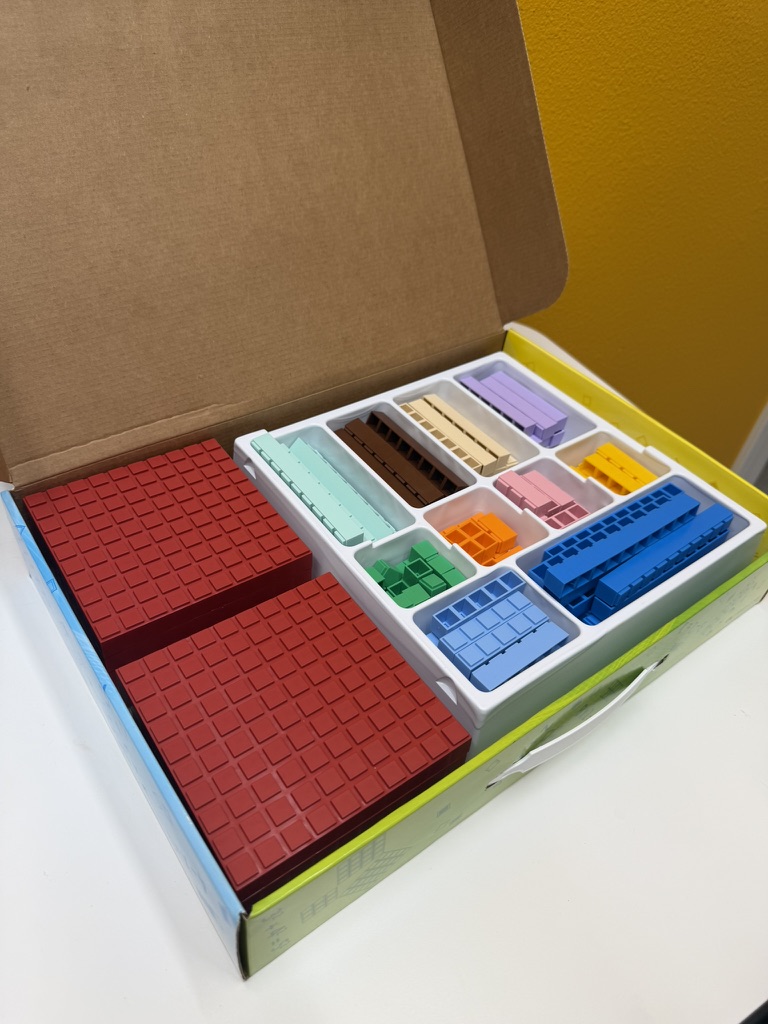
Whether your child is learning place value, multiplication, fractions, or long division, they first build the concept so they can actually see what’s happening.
That’s one of the reasons I believe the curriculum develops such strong conceptual understanding.
✏️ Step 2: Write It
Once your child understands the concept with the manipulatives, they immediately apply that understanding by solving a few problems on paper.
Notice I said a few.
The goal here isn’t repetition.
The goal is making sure your child can transfer what they just built into written mathematics.
It’s the bridge between the concrete and the abstract.
🗣 Step 3: Say It
The final step is Say It.
After building the concept with the manipulatives and writing the answer on paper, your child simply says the answer aloud.
It sounds almost too simple to matter.
But I don’t think it should be overlooked.
Research on what’s known as the Production Effect suggests that information we say aloud is often remembered better than information we only read silently. Speaking engages additional cognitive processes, and hearing ourselves say an answer can strengthen memory.
To me, that’s one of those small details that makes a lot of sense.
It’s quick.
It doesn’t require extra preparation.
Yet it gives your child one more opportunity to engage with what they’ve just learned.
💛 FROM MY EXPERIENCE…
One way I like to take “Say It” a step further is by asking your child to explain the concept back to me—or to you. I don’t just want to know that they can get the right answer—I want to know that they understand why it works. When your child can explain a concept in their own words, it’s a good sign that the understanding is becoming their own rather than simply repeating a procedure they just learned. If they struggle to explain it, that’s usually my cue to pull the manipulatives back out and spend a little more time exploring the concept before moving on.
What Happens After the Lesson?
Once your child understands the new concept, it’s time to strengthen it.
This is where the workbook comes in.
Each lesson typically includes:
| Workbook pages | What they focus on |
|---|---|
| Practice A, B, C | Primarily the new concept your child just learned |
| Systematic Review D, E, F | The new concept plus review of older concepts |
| Enhancement | Optional |
| Test | A checkpoint before moving on |
The first three practice pages focus primarily on the new concept your child just learned.
Then something interesting happens.
The next three pages shift into Systematic Review.
This is one of the reasons I think Math-U-See is more balanced than people often give it credit for.
Although the instruction follows a mastery approach, the practice doesn’t ignore previously learned material.
Instead, your child continues reviewing older concepts while gaining confidence with the new one.
To me, that’s a thoughtful balance.
Your child isn’t learning five new topics every day.
But they also aren’t forgetting everything they’ve already learned.
Should You Skip Practice Pages?
One feature many parents don’t realize is that Math-U-See gives you flexibility.
If your child demonstrates mastery after completing Practice A, you’re allowed to move directly to the Systematic Review pages.
Likewise, if they demonstrate mastery after Practice B, you can skip Practice C.
Personally…
I usually encourage families to complete the practice pages.
Here’s why.
One thing I’ve learned over the years is that getting today’s problems right doesn’t necessarily mean the concept has become part of the way your child thinks.
Sometimes they’re simply remembering what they saw five minutes ago.
Understanding takes time.
Connections take time.
Confidence takes time.
That’s why I often ask parents a very simple question.
What’s the rush?
Some of the deepest learning happens after your child already thinks they understand the lesson.
Those extra practice pages often help them recognize patterns, make connections, and build confidence before moving into the Systematic Review.
To me, that’s time well spent.
How Long Does a Lesson Take?
The teaching portion of a Math-U-See lesson is intentionally concise.
My video lessons are typically around 10 minutes, with some running 10–15 minutes for more challenging concepts.
After the lesson, your child works through one workbook page each day.
Most families spread a lesson across about a week.
A typical schedule looks something like this:
| Day | The plan |
|---|---|
| Day 1 | Watch the lesson, Build It • Write It • Say It, then complete Practice A |
| Day 2 | Practice B |
| Day 3 | Practice C |
| Days 4–6 | Systematic Review D–F |
| Day 7 (optional) | Enhancement page or lesson test |
One of the things I appreciate about Math-U-See is that it doesn’t expect every child to move at exactly the same pace.
If your child needs another day…
take another day.
If they need another week…
take another week.
Every lesson builds on the one before it.
Strong foundations make every future lesson easier.
PART 3
Before You Choose Math-U-See…
Over the years, I’ve had the privilege of working with thousands of homeschool families using Math-U-See.
Some absolutely loved it.
Others eventually discovered another curriculum was a better fit.
Neither outcome surprised me.
No curriculum is perfect for every child.
But there are a handful of things I find myself saying over and over again to families who are considering Math-U-See.
If we were sitting down together over coffee, these are the conversations I’d want us to have before you ever opened the first lesson.
Don’t Put the Blocks Away
If I could give every Math-U-See family one piece of advice, it would be this:
Keep using the manipulatives.
One of the biggest mistakes I see parents make is treating the blocks like training wheels.
Once their child seems to understand a concept, the blocks go back in the box.
Personally, I think that’s exactly backwards.
The manipulatives aren’t just there to introduce new ideas.
They’re there to continually reinforce them.
Everything in Math-U-See is built on a deep understanding of place value. That understanding becomes even more important as your child moves into multiplication, division, fractions, decimals, and eventually algebra.
The blocks continue showing what’s happening beneath the procedures.
I often think of them as revealing the skeleton of the mathematics.
Instead of simply remembering the steps for long division, your child can actually see what those steps represent.
Instead of memorizing multiplication facts, they see the dimensions of a rectangle and understand why the product represents its area.
Instead of mechanically finding common denominators, they can watch fractions being divided into smaller equal parts until the common denominator makes perfect sense.
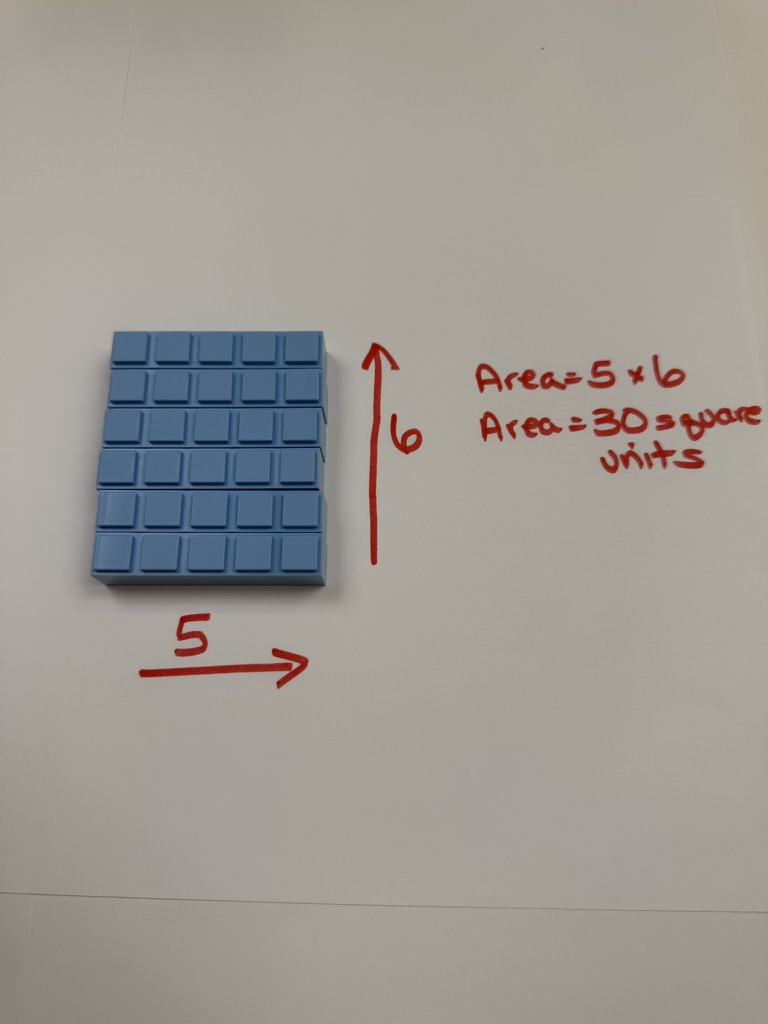
That’s a very different kind of learning.
The goal isn’t simply to remember the procedure.
The goal is to understand why the procedure works.
💛 FROM MY EXPERIENCE…
The students who seem to gain the deepest understanding from Math-U-See aren’t usually the fastest students. They’re the students who continue reaching for the manipulatives long after they think they no longer need them.
What’s the Rush?
This isn’t really about Math-U-See.
It’s about learning.
One of the things I see in almost every curriculum is the desire to move on as quickly as possible.
Your child gets the answers correct.
The lesson is finished.
The natural question becomes,
“Can we move on?”
Maybe.
But I’d encourage you to ask a different question.
“Have they really mastered it?”
Those aren’t always the same thing.
Sometimes a child gets every problem right because the lesson is still fresh in their mind.
That doesn’t necessarily mean the concept has become part of the way they think.
Real mastery often happens a day or two later.
As your child works additional problems…
As they begin making connections to previous lessons…
As they recognize patterns they didn’t notice on the first day…
That’s where understanding becomes lasting.
One extra day spent strengthening a foundation is almost never wasted.
Math isn’t a race.
The goal isn’t to finish the curriculum.
The goal is to build a mathematical foundation that lasts long after the workbook is complete.
Every Lesson Builds on the One Before It
One of the things I appreciate about Math-U-See is how intentionally each lesson builds upon the previous one.
That creates a wonderful progression for students.
It also means that misunderstandings need to be addressed quickly.
If today’s confusion isn’t resolved, tomorrow’s lesson becomes a little harder.
Then the next lesson becomes harder still.
Eventually what started as one small misunderstanding can snowball into something much bigger.
That’s one of the reasons I encourage parents to stay involved, even when their child is watching my lessons independently.
I Think of Teaching as a Partnership
One of the questions I hear from parents is,
“How involved do I need to be?”
My answer is…
Probably less than you think—but more than not at all.
Here’s how I think about it.
- I’ll teach the lesson.
- I’ll provide the automatic grading.
- I’ll help identify where your child is struggling.
But I can’t replace you.
One of the most valuable things you can do is spend a few minutes each day reviewing your child’s progress.
If you’re using Nicole the Math Lady, that means looking at the emailed lesson reports and checking the Trouble Spots report when needed.
Remember, your child has multiple opportunities to answer each question correctly.
If they still aren’t able to correct a problem after several attempts, that’s usually a sign they don’t fully understand the concept.
That’s your opportunity to step in.
Watch that portion of the lesson together.
Pull out the manipulatives.
Ask them to explain their thinking.
Most misunderstandings are much easier to fix today than they are three chapters from now.
I’ve always believed the best learning happens when we’re working together.
I teach. You encourage. Your child grows.
No Curriculum Teaches Math Facts for You
This is something I wish every homeschool parent knew.
I’ve never seen a curriculum where students truly master their math facts simply by completing the daily lessons.
Math facts become automatic through consistent practice.
Math-U-See certainly provides opportunities to work with math facts, and I appreciate the mental strategies it introduces.
But if your goal is quick, automatic recall, I still recommend intentional math fact practice outside the daily lesson.
That’s true regardless of whether you’re using Math-U-See, Saxon, Singapore, RightStart, or any other curriculum.
Strong math facts free your child’s brain to think about the mathematics instead of spending all their energy recalling basic facts.
I Wish There Were More Mental Math
If I could change one thing about Math-U-See, it would probably be this.
I’d include even more intentional mental math practice.
The curriculum certainly includes mental math.
Students are encouraged to think about numbers, and several lessons introduce strategies for working mentally with math facts.
I simply believe mental math deserves an even larger role.
Mental math isn’t about showing off.
It’s about developing number sense.
Students who regularly practice mental math begin recognizing patterns more quickly.
They estimate more naturally.
They develop flexibility with numbers that serves them throughout mathematics.
For that reason, I encourage families to spend a few minutes each day practicing mental math, regardless of which curriculum they choose.
💛 MY HOPE FOR YOUR FAMILY
Whether you choose Math-U-See or another curriculum, I hope you’ll remember this. Children don’t become confident because they move quickly. They become confident because they understand what they’re doing. Confidence is built one lesson at a time. One conversation at a time. One “aha!” moment at a time. If you focus on building understanding first, confidence almost always follows.
PART 4
Who I Think Is a Great Fit for Math-U-See
By now, you’ve probably started thinking about your own child.
That’s exactly what I hoped would happen.
So let me tell you who I usually recommend Math-U-See to.
✅ I’d Feel Confident Recommending Math-U-See If Your Child…
Loves understanding why math works.
Some children aren’t satisfied memorizing procedures.
They want to understand what’s happening behind the scenes.
If your child regularly asks, “Why does that work?”
Math-U-See often does an excellent job answering that question.
Learns best by seeing and doing.
If your child benefits from building, touching, and physically interacting with mathematics before moving to paper and pencil, I think they’ll appreciate the way Math-U-See teaches.
The manipulatives aren’t simply making math more interesting.
They’re helping your child develop a deeper understanding of mathematical relationships.
Benefits from focusing on one new idea at a time.
Some students become overwhelmed when every lesson introduces several unrelated concepts.
Math-U-See allows your child to settle into one concept before introducing the next.
For many students, that creates confidence.
Is willing to use the manipulatives consistently.
I know I’ve said this several times throughout this guide.
That’s intentional.
The manipulatives are one of the greatest strengths of this curriculum.
If your child is willing to continue using them—even after they think they no longer need them—I believe they’ll receive the greatest benefit from the program.
And let me add one more thing: I LOVE the way the manipulative kit is organized. I’m an admitted organizational freak, so this makes me ridiculously happy. Every manipulative has its own place, and everything fits neatly into a carrying case with a handle. It’s such a small detail, but when you’re actually using these materials day after day, it makes a big difference.
🔄 I Might Recommend Another Curriculum If…
One of the things I’ve learned over the years is that recommending a curriculum isn’t about deciding whether it’s good.
It’s about deciding whether it’s the right fit.
There are several situations where I often encourage families to consider another option.
Your child enjoys discovering concepts independently.
Math-U-See is primarily teacher-guided.
The lesson is explained first.
The manipulatives reinforce that explanation.
If your child loves discovering mathematical ideas through games, exploration, and guided questioning, a curriculum like RightStart Math may be a better fit.
Neither approach is better.
They’re simply different.
Your child needs very heavy daily mixed review.
Math-U-See includes far more review than many parents realize through its Systematic Review pages.
However, some students genuinely need a stronger spiral approach with many different concepts practiced every day.
Those students often thrive with a curriculum like Saxon.
You don’t plan to use the manipulatives.
This probably won’t surprise you.
If the blocks are going to spend most of their time sitting in the storage case…
I’d probably choose a different curriculum.
The manipulatives are simply too important to the way Math-U-See teaches.
My Bottom Line
After spending years teaching and working with families, here’s where I’ve landed.
I think Math-U-See provides one of the strongest conceptual foundations available in homeschool mathematics.
I especially appreciate the way it develops place value, models multiplication visually, and helps students understand fractions through hands-on learning instead of memorizing procedures.
I also appreciate that it’s more balanced than many people realize.
Yes, it uses a mastery approach to instruction.
But the ongoing Systematic Review gives students regular opportunities to revisit concepts they’ve already learned.
To me, that’s one of the curriculum’s most misunderstood strengths.
If I had one piece of advice for families considering Math-U-See, it would simply be this:
Don’t rush it.
Use the manipulatives.
Complete the practice.
Ask your child to explain their thinking.
Watch for understanding instead of speed.
When you do that, I think you’ll discover why so many homeschool families have come to love this curriculum.
One Final Thought
Parents sometimes ask me,
“What’s the best homeschool math curriculum?”
I still don’t have an answer to that question.
Because I don’t think one exists.
The best curriculum isn’t the one with the highest ratings.
It isn’t the one everyone else is using.
It isn’t even necessarily the one I like the most.
The best curriculum is the one that matches the way your child learns.
When the curriculum and the learner fit well together, something wonderful happens.
Math starts making sense.
Confidence begins to grow.
And children who once believed they “weren’t math people” begin to discover that maybe they were capable all along.
That’s what I’m really hoping for your family.
Whether that’s with Math-U-See or another curriculum.
Still Deciding?
Choosing a homeschool math curriculum is a big decision.
If you’re still deciding between Math-U-See and another program, I’d encourage you to take my Math Match Quiz.
I created it to help parents think through the same questions I ask when I’m helping families choose a curriculum:
- Does your child learn best through direct instruction or discovery?
- How much built-in practice does your child need?
- Would they benefit from manipulatives?
- How much review helps them retain what they’ve learned?
- What type of teaching style fits them best?
By the end of the quiz, you’ll have a much clearer picture of which curriculum is likely to be the best fit for your child.
Because that’s always been my goal.
Not to convince you to choose a particular curriculum.
To help you choose the right one.
— Nicole