Saxon Math 6/5
Saxon Math 6/5 covers concepts such as: the order of operations; geometry and measurement; integers; divisibility concepts; ratios; statistics and probability; prime and composite numbers; patterns and sequences; and powers and roots. Students will specifically learn about making a multiplication table, adding/subtracting fractions with a common denominator, multiplying by multiples of 10 and 100, perimeter, simple probability, decimal parts of a meter, reciprocals, volume, square roots, graphing points on a coordinate plane, and more. (120 Lessons plus 12 Investigations)
Teaching in a school or co-op? See Saxon Math Intermediate 5 (school edition)Lessons taught & reviewed by Nicole Thomas · Updated October 2026
What Saxon Math 6/5 Covers
- Order of operations and integers
- Divisibility, prime and composite numbers
- Ratios, powers, and square roots
- Adding and subtracting fractions with common denominators
- Perimeter, volume, and decimal parts of a meter
- Statistics and simple probability
- Patterns, sequences, and graphing points on a coordinate plane
Saxon Math 6/5 Table of Contents
The full lesson-by-lesson scope and sequence for Saxon Math 6/5, so you know exactly what your student will learn before you start.
132 lessons
Lesson 1·Sequences
Lesson 2·Even and Odd Numbers
Lesson 3·Using Money to Illustrate Place Value
Lesson 4·Comparing Whole Numbers
Lesson 5·Naming Whole Numbers through hundreds/Dollars and Cents
Lesson 6·Adding One-Digit Numbers/Using the Addition Algorithm
Lesson 7·Writing and Comparing Numbers Through Hundred Thousands/Ordinal Numbers
Lesson 8·Subtraction Facts/Fact Families
Lesson 9·Practicing the Subtraction Algorithm
Lesson 10·Missing Addends
Investigation 1·Story Problems
Lesson 11·Story Problems about Combining
Lesson 12·Lines/Number Lines/Tally Marks
Lesson 13·Multiplication as Repeated Addition/Adding and Subtracting Dollars and Cents
Lesson 14·Missing Numbers in Subtraction
Lesson 15·Making a Multiplication Table
Lesson 16·Story Problems about Separating
Lesson 17·Multiplying by One-Digit Numbers
Lesson 18·Multiplying Three Factors/Missing Numbers in Multiplication
Lesson 19·Division Facts
Lesson 20·Three Ways to Show Division
Investigation 2·Fractions: Halves, Fourths, Tenths
Lesson 21·Problems about Equal Groups
Lesson 22·One-Digit Division with a Remainder/Divisibility by 2, 5 and 10
Lesson 23·Recognizing Halves
Lesson 24·Parentheses/Associative Property
Lesson 25·Listing the Factors of Whole Numbers
Lesson 26·Division Algorithm
Lesson 27·Reading Scales
Lesson 28·Measuring time, part 1
Lesson 29·Multiplying by Multiples of 10 and 100
Lesson 30·Interpreting Pictures of Fractions and Percents
Investigation 3·Fractions Thirds, Fifths and Eighths
Lesson 31·Pairs of Lines
Lesson 32·Angles/Polygons
Lesson 33·Rounding Numbers Using a Number Line
Lesson 34·Division with Zeros in the Quotient
Lesson 35·Problems about Comparing/ Problems about Elapsed Time
Lesson 36·Classifying Triangles
Lesson 37·Drawing Pictures of Fractions
Lesson 38·Fraction and Mixed Numbers on a Number Line
Lesson 39·Comparing Fractions by Drawing Pictures
Lesson 40·Pictures of Mixed Numbers/Writing Quotients as Mixed Numbers, Part 1
Investigation 4·Measuring Angles
Lesson 41·Adding and Subtracting Fractions with Common Denominators
Lesson 42·Short Division/Divisibility by 3, 6 and 9
Lesson 43·Writing Quotients as Mixed Numbers, Part 2/ Adding and Subtracting Whole Numbers, Fractions and Mixed Numbers
Lesson 44·Measuring Lengths with a Ruler
Lesson 45·Classifying Quadrilaterals
Lesson 46·Stories about Fraction of a Group
Lesson 47·Simplifying Mixed Measures
Lesson 48·Reading and Writing Whole Numbers in Expanded Notation
Lesson 49·Solving Two-Step Word Problems
Lesson 50·Finding an Average
Investigation 5·Organizing and Analyzing Data
Lesson 51·Multiplying by Two-Digit Numbers
Lesson 52·Naming Numbers through the Hundred Billions
Lesson 53·Perimeter/ Measures of a Circle
Lesson 54·Dividing by Multiples of 10
Lesson 55·Multiplying by 3 Digit Numbers
Lesson 56·Multiplying by Three-Digit Numbers That Include Zero
Lesson 57·Simple Probability
Lesson 58·Writing Quotients as Mixed Numbers, Part 3
Lesson 59·Fractions Equal to 1/Subtracting a Fraction from 1
Lesson 60·Finding a Fraction to Complete a Whole
Investigation 6·Performing Probability Experiments
Lesson 61·Using Letters to Identify Geometric Figures
Lesson 62·Estimating Arithmetic Answers
Lesson 63·Subtracting a Fraction from a Whole Number Greater than 1
Lesson 64·Using Money to Model Decimal Numbers
Lesson 65·Decimal Parts of a Meter
Lesson 66·Reading a Centimeter Scale
Lesson 67·Writing Tenths and Hundredths as Decimal Numbers
Lesson 68·Naming Decimal Numbers
Lesson 69·Fractions of a Second/Comparing and Ordering Decimal Numbers
Lesson 70·Writing Equivalent Decimal Numbers/Writing Cents Correctly
Investigation 7·Pattern Recognition
Lesson 71·Fractions, Decimals and Percents
Lesson 72·Area Part 1
Lesson 73·Adding and Subtracting Decimal Numbers
Lesson 74·Converting Units of Length
Lesson 75·Changing Improper Fractions to Mixed Numbers
Lesson 76·Multiplying Fractions
Lesson 77·Converting Units of Weight and Mass
Lesson 78·Exponents and Powers
Lesson 79·Finding Equivalent Fractions by Multiplying by 1
Lesson 80·Prime and Composite Numbers
Investigation 8·Displaying Data
Lesson 81·Reducing Fractions, Part 1
Lesson 82·Greatest Common Factor (GCF)
Lesson 83·Properties of Geometric Solids
Lesson 84·Mean, Median, Mode and Range
Lesson 85·Converting Units of Capacity
Lesson 86·Multiplying Fractions and Whole Numbers
Lesson 87·Using Manipulatives and Sketches to Divide Fractions
Lesson 88·Transformations
Lesson 89·Finding a Square Root
Lesson 90·Reducing Fractions, Part 2
Investigation 9·Line Graphs
Lesson 91·Simplifying Improper Fractions
Lesson 92·Dividing by Two-Digit Numbers
Lesson 93·Comparative Bar Graphs
Lesson 94·Using Estimation When Dividing by Two-Digit Numbers
Lesson 95·Reciprocals
Lesson 96·Using Reciprocals to Divide Fractions
Lesson 97·Ratio
Lesson 98·Negative Numbers
Lesson 99·Adding and Subtracting Whole Numbers and Decimal Numbers
Lesson 100·Simplifying Decimal Numbers
Investigation 10·Graphing Points on a Coordinate Plane
Lesson 101·Rounding Mixed Numbers to the Nearest Whole Numbers
Lesson 102·Subtracting Decimal Numbers Using Zero
Lesson 103·Volume
Lesson 104·Rounding Decimal Numbers to the Nearest Whole Number
Lesson 105·Symmetry
Lesson 106·Reading and Ordering Decimal Numbers Through Ten-Thousandths
Lesson 107·Using Percent to Name Part of a Group
Lesson 108·Schedules
Lesson 109·Multiplying Decimal Numbers
Lesson 110·Multiplying Decimal Numbers: Using Zeros as Placeholders
Investigation 11·Scale Drawings
Lesson 111·Multiplying Decimal Numbers by 10, by 100, and by 1000
Lesson 112·Finding the Least Common Multiple of Two Numbers
Lesson 113·Writing Mixed Numbers as Improper Fractions
Lesson 114·Problems with No Solutions or Many Solutions
Lesson 115·Area, Part 2
Lesson 116·Finding Common Denominators to Add, Subtract, and Compare Fractions
Lesson 117·Dividing a Decimal Number by a Whole Number
Lesson 118·Using Zero as a Placeholder/Dividing Decimal Numbers by 10, by 100 and by 1000
Lesson 119·Dividing by a Decimal Number
Lesson 120·Multiplying Mixed Numbers
Investigation 12·Tessellations
Textbooks You'll Need for Saxon Math 6/5
You supply your own textbooks; Nicole the Math Lady provides the video lessons, grading, and support (The Math Pass). Here are the materials and where to buy them.
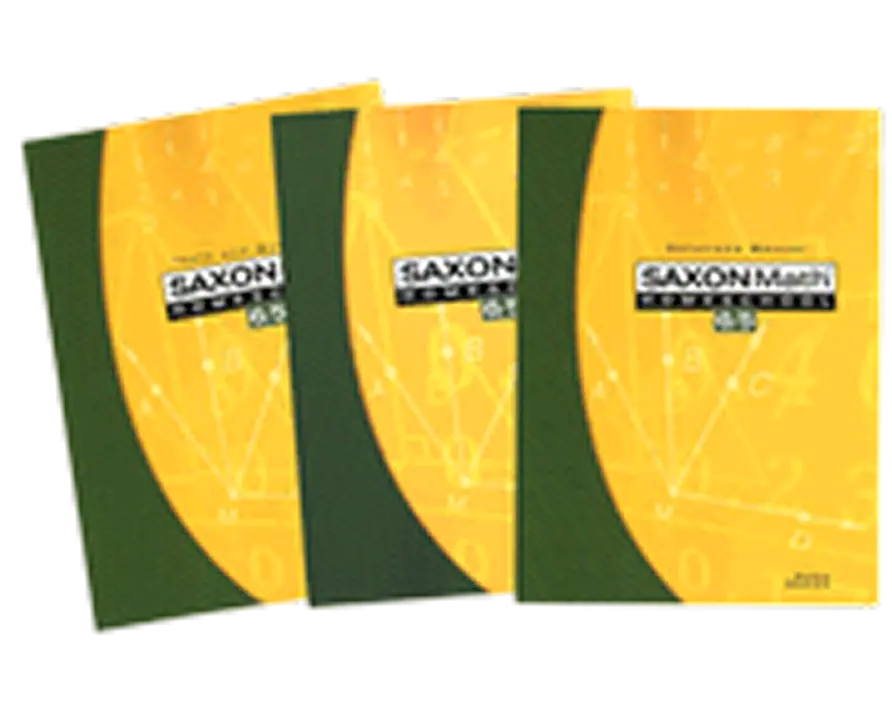
Saxon Math 6/5 Homeschool Kit, 3rd Edition
Saxon Math 6/5 Student Textbook, 3rd Edition
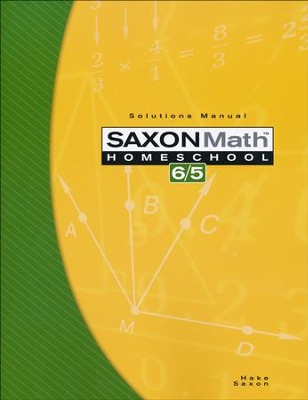
Saxon Math 6/5 Solutions Manual, 3rd Edition